
9 minutes
⟵ Back to Blog
Eyesight – A personal journey of discovery by Irralee Andrzejowska
Contents
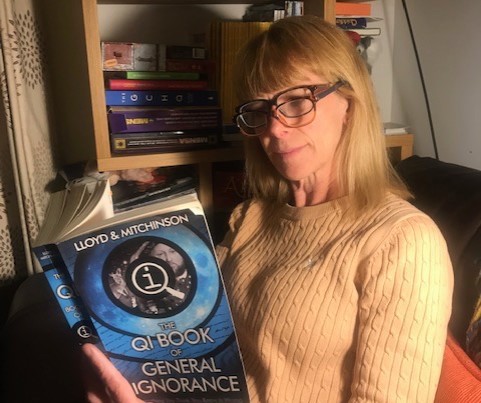
I started wearing glasses at senior school and my sight steadily deteriorated to -4.50 and -3.00 where it has remained stable during my adult years. The conventional wisdom as I understood it, was that this was genetic and it is attributed to the size and shape of my eyeball affecting where the image converges on the retina, and I accepted this explanation at the time. However, no one else in my family wore glasses, although interestingly I was the only studious one.
Then I learned that when you reach around age of 50, inevitably you become long sighted and this is explained to be due to your lens stiffening and so your eyes don’t accommodate very well. I am 50, and 2 years ago, I started to notice that I couldn’t read the instructions on packets when cooking, or read ingredient lists on products. After squinting for many months, I finally succumbed to wearing +1.5 glasses as assessed by my optician. This seemed normal as all my friends were the same. I found I needed them for all reading and computer work.
My eldest daughter, who is now 21 years old, started needing glasses in junior school, and her prescription has steadily worsened to -7.00 each eye. We would sometimes comment to each other “thank goodness you live in an age when corrective lens are available, it would have been awful to have this terrible eyesight without glasses as in the past”.
I pondered that poor eyesight is such a survival disadvantage, it is surprising it hasn’t been lost long ago due to natural selection. I also thought it was strange that sight problems seem to develop at very different ages between people. Were eyeballs really changing sizes at different developmental stages in life? And why did it seem there is always the inevitable deterioration every eye test each year until it stabilises eventually.
How I improved my eyesight
I began thinking more about eyesight after reading a chapter in Norman Doidge’s book, The Brains Way of Healing, about a blind man learning to see again, which is an incredible story, and it really opened my eyes (apologies for the pun!). I was inspired to try the mindbody approach to my minor eyesight problems, to see if I could make any improvement.
So I followed the steps I take with all mindbody problems.
Challenge the self limiting beliefs:
About eyesight: that myopia is determined by genetics dictating the shape of my eyeballs and long-sightedness at middle age is an inevitable consequence of a stiffening lens. Maybe there is another explanation?
Allow me to summarize the main points which set off my lightbulb moments. In the book Doidge mentions William Bates, who lived 1860-1931, and was a New York Physician, Ophthalmologist and Eye Surgeon. He successfully treated his patients with neuroplastic exercises, improving their eyesight so that they could get rid of their glasses. Much like Dr Sarno, his was repeatedly called a fraud by skeptics as his ideas challenged conventional wisdom about eyesight.
Bates questioned the belief that focusing depends entirely on the lens changing shape, especially as patients who had their lens removed due to cataracts and replaced with rigid lenses could still adjust their focus. He realized that it was much more complicated than that.
He helped pioneer the medical use of adrenaline and he understood how stress affects muscle tone. He measured 1000’s of eyes and discovered visual clarity fluctuated within individuals according to stress levels.
In other research he found that the entire eyeball shape lengthened or shortened via contraction of the 6 pairs of external muscles surrounding the eyes. He concluded short sightedness occurred because the external muscles were in a state of high tonus, making the shape more rigid and unable to focus. As we know, when in a state of fight/flight our vision becomes fixed and narrow to focus on the perceived threat.
In addition, was the understanding that the eye makes invisible micro-saccade movements to keep refreshing the image to the brain, so seeing is not passive but requires movement of the eyes.(makes sense, it stops habituation of what we can see). This was actually observed by Charles Darwin’s father, Robert. This is supported by a study in which a drug which paralyses the eye muscles results in an inability to see.
And finally, he pointed out the huge influence of culture on how we habitually use our eyes and how this impacts our eyesight. This was something I had pondered…why did people who work outdoors generally not wear glasses as much as those who worked on computers or studied a lot? In Asian countries where glasses were hardly used 100 years ago, in more recent decades, academic pressure has resulted in children reading intensely from young ages and now 70% of Asians are myopic! These changes are too fast to be explained by genetics.
Hope for improvement:
This reframed perspective about my myopia and long-sightedness gave me a glimmer of hope that maybe my impaired eyesight was something I could change after all, using mind body techniques, rather than resign to it and accept the common “wisdom” of its inevitability. Wow, I now realized wearing glasses could possibly be just another case of treating the symptoms, which continue to worsen over time, instead of addressing the cause. And unlike pain, it is something that you can quantify with eye test results so I could have evidence to show for any improvement if it occurred. Ok, this was great motivation to apply myself to this challenge and gather evidence to persuade the sceptics around me!
Increased awareness:
Of when I was tensing my eye muscles, then choosing to relax them. Sometimes I would also do 2 exercises: Palming, which is when you place relaxed palms over your eyes (fingers facing up towards top of head) to encourage softening of eye muscles; and a Feldenkrais exercise where you close your eyes, hold your hands about 30cm diagonally out in front of eyes, and try and push and pull your eyeball using your eye muscles along an imaginary string between eye socket and fingers, which I considered to be an exercise akin to rolling your shoulders for tense upper trapezius muscles, interrupting chronic tone in my eye muscles.
Reducing the fear:
It is stressful when everything looks very blurry, and this makes evolutionary sense. I normally wear contacts all day and used to put my glasses on within 5 seconds of getting up out of bed, taking them off right before lights out. In fact, when reading in bed after taking out my contact lenses it was a ridiculous situation where I would be wearing my reading glasses with my short-sighted glasses on top. I hated not being able to see properly. This fear-based message was being sent to my nervous system every single day, and it reinforced my need to rely on glasses to avoid this fear. Having now become aware of this, I started not putting my glasses on for the first hour of the day whilst doing the morning routine, whilst not squinting to see but keeping my eye muscles relaxed and feeling OK about everything being out of focus. This exercise was like exposing myself to the feared environment (blurriness) whilst keeping a relaxed muscle tension and nervous system in order to rewire my response.
Cultivating an indifference to blurry vision:
Now on waking I spend as long as I can doing the habitual morning routine without glasses on or contact lens in and without squinting. I have learnt to tolerate blurry vision, and not hate it or be fearful of it or trying to avoid it. Obviously, I need to put my lenses in in order to be able to drive etc but I consider this time in the morning as training time for my eye muscles and neural pathways.
Persistence and patience:
Neuroplastic changes take a lot of repetition and time. I haven’t done a lot of work on this in a formal way, but I believe my subconscious has because with what I had read I was convinced this was a worthwhile process. I believe by wearing my corrective lenses less it has given an opportunity for my eye muscles to exercise more normally, akin to removing crutches to correct limping. My eyes needed the opportunity to try it alone, without the “crutch” of corrective lenses.
Not trying too hard to change it:
I took on this challenge as an aside really, not putting a lot of effort in but casually applying the above without monitoring progress, just patiently giving the time with an open mind to see what would happen. So, I can’t really say when I noticed I didn’t need reading glasses anymore, but it was only after a couple of months.
Correlating sources of stress to onset of symptoms:
Now it had me thinking about the timing of the onset of my vision problems. Probably not a coincidence that it coincided with my mum remarrying someone she had recently met, then having to move from Brisbane to Sydney as a teenager, changing schools/hobbies and friendships and moving in with a new Step Father and his 2 teenage sons. Nothing very stressful about that! Also, the timing of my long-sightedness (needing reading glasses) seems to have coincided with more stressful occurrences related to my teenage daughters (a common middle age occurrence!).
My results so far
So, as a result of the above for the last few months I have no longer required reading glasses for computer or reading activities. I saw my Optician last week, and he confirmed I no longer need reading glasses. My distance sight has not changed, yet, but time will tell if this changes over longer period of time, which might show up on my next appointment in a year’s time.
The Metaphysical Anatomy explanation for the symptom
I’m also always surprised by the explanations in Metaphysical Anatomy so I thought you might like to know what they have to say about eyesight in case it could give you any insights.
“People with eye problems often find it challenging to accept support from others. You are often rigid about certain aspects of your life that you do not want to consciously become aware of, whether it is an abusive family history or current issues. The more stress, anxiety and abuse you have experienced, the more contracted and rigid the muscles behind the eyes become. You often lose sight of what you want in life and how you are going to attract it. Sometimes you need to be pushed or rescued from your own destructive circumstances. People with eye problems often have/had a religious background. You want to believe something you cannot see however, as a result of a hostile childhood and lack of trust, you cannot trust what you cannot see. Focus on the areas in your life that cause you stress. What do you see that causes stress, sadness or fear? This is often related to how certain events in your past made you feel.”
Irralee Andrzejowska
SIRPA Trained Physiotherapist, Sheffield UK
About Irralee:
Having worked with clients with musculoskeletal pain in the private sector for 25 years, my practice has been revolutionized following training with SIRPA and implementing the mind-body approach to the treatment of pain. I am passionate about this holistic approach. If you would like to know more, please contact me via email so we can arrange a free 30 minute call to answer your questions and to see if this approach is what you are looking for.