
3 minutes
⟵ Back to Blog
Exploring ‘The Felt Sense Prayer’: A Path to Self-Awareness and Healing
Contents
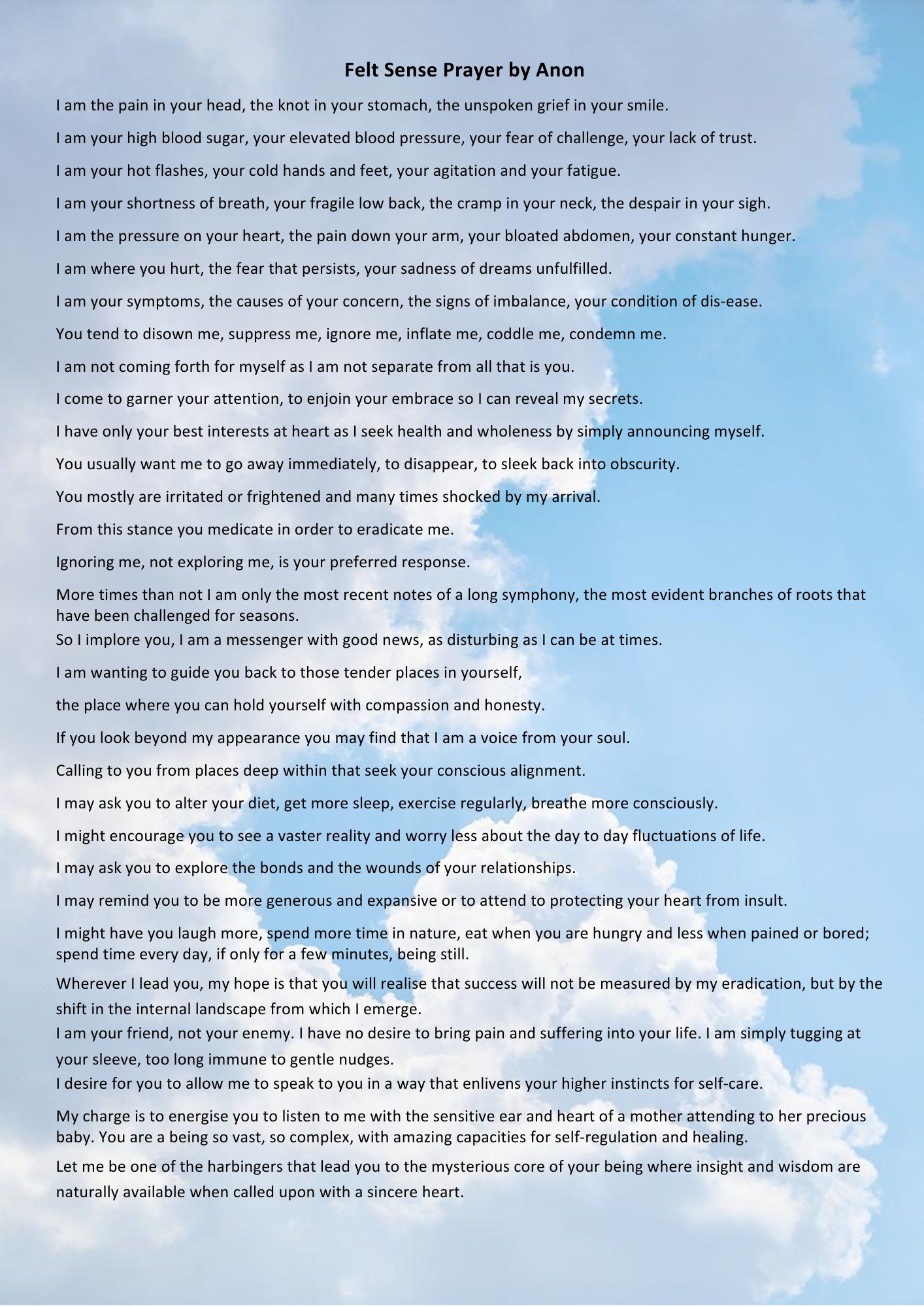
Poetry has long been a source of comfort, wisdom, and personal reflection. One poem that often deeply resonates with those on a journey of self-discovery and healing is, The Felt Sense Prayer. Though its author remains anonymous, the poem’s message is universal and timeless, offering a profound perspective on self-awareness, emotional acceptance, and inner peace.
Understanding ‘The Felt Sense Prayer’
At its core, The Felt Sense Prayer invites us to listen to our bodies and emotions with patience and compassion. The poem is rooted in the concept of Focusing, a therapeutic technique developed by psychologist Eugene Gendlin. Focusing, and the emotional awareness and somatic tracking that we use within the SIRPA approach, encourages individuals to tune into their felt sense—the subtle, bodily awareness that holds insights into our emotions and experiences.
Rather than dismissing uncomfortable emotions or rushing to fix them, the poem suggests that we acknowledge and welcome them. It gently reminds us that every sensation, every feeling, and every tension we experience has a message for us. Instead of fighting against pain, anxiety, or sadness, we are encouraged to approach them with curiosity and kindness, as though they were visitors with wisdom to share.
The Meaning Behind the Poem
The poem suggests that emotions are not obstacles to be conquered but guides, leading us to deeper self-understanding. When we resist our emotions, we create inner conflict. However, when we accept them without judgment and allow them to safely pass through, we allow healing to take place. The Felt Sense Prayer invites us to trust that whatever arises within us is part of our journey and deserves our attention.
Each feeling—whether joy, sorrow, fear, or frustration—carries a message. If we listen closely and with curiosity, we may uncover hidden truths about our needs, desires, and unresolved wounds, which a practice of journaling can also help you with. This practice of self-acceptance fosters emotional resilience and a greater sense of wholeness.
How Can We Benefit from ‘The Felt Sense Prayer’?
Incorporating the wisdom of The Felt Sense Prayer into daily life can have profound benefits. Here are some ways we can apply its message:
- Practicing Mindful Awareness – Set aside time to sit quietly and tune into your body. Notice any sensations or emotions that arise without labeling them as good or bad. Simply acknowledge their presence.
- Embracing Self-Compassion – Instead of criticizing yourself for feeling a certain way, approach your emotions with kindness. Imagine speaking to yourself as you would a dear friend in need of comfort.
- Reducing Emotional Resistance – The more we resist emotions, the more they persist. By accepting them, we allow them to flow naturally and dissipate when they have served their purpose.
- Enhancing Emotional Intelligence – Understanding our emotions helps us respond to situations with greater clarity and empathy, improving our relationships and overall well-being.
- Finding Inner Peace – When we stop battling our inner experiences and start embracing them, we cultivate a deep sense of peace and self-trust.
Final Thoughts
The Felt Sense Prayer is more than just a poem—it is an invitation to live with greater presence, awareness, and self-compassion. By learning to listen to our felt sense, we gain a deeper understanding of ourselves and our emotions, leading to healing and growth. Whether you are new to this concept or have long practiced mindfulness and emotional awareness, the poem offers a gentle reminder that everything within us deserves to be met with patience and care.
Take a moment today to pause, breathe, and feel, listening to what your body and emotions are trying to tell you. You might just discover the wisdom you’ve been seeking all along.