
5 minutes
⟵ Back to Blog
The Challenges of Changing a Paradigm: The Legacy of Dr. John Sarno and the Evolution of Mindbody Medicine
Contents
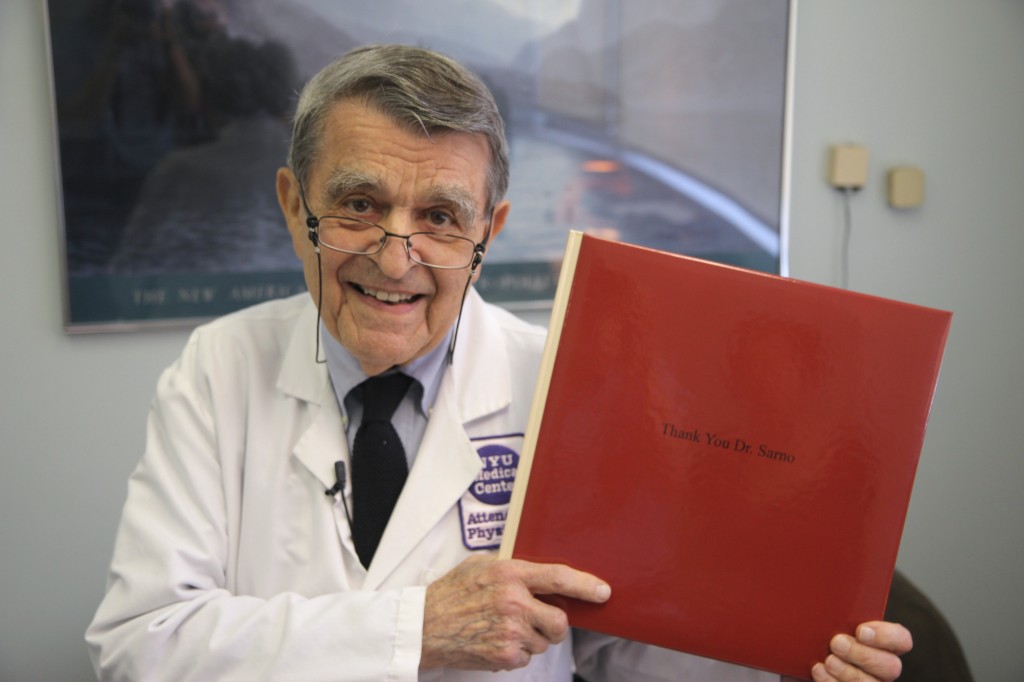
History has shown that paradigm shifts in science and medicine are often met with resistance, scepticism, and even outright hostility. This was certainly the case for Dr. John Sarno, a pioneering physician whose groundbreaking work on the mindbody connection and chronic pain was dismissed by many of his peers for decades. From the 1970s until his retirement in his late 80s, Sarno dedicated his life to treating patients suffering from chronic pain—achieving remarkable and often life-changing results—while simultaneously battling professional ostracization.
Despite his exclusion from mainstream medical circles, Sarno’s work resonated with thousands of patients who found lasting relief through his approach. He even testified before the U.S. Senate in an effort to advocate for his findings, but the dominant paradigm of chronic pain treatment—one centred on structural abnormalities and symptom management—remained firmly in place.
However, before his death, Sarno saw the seeds of a movement beginning to take root. Today, his legacy lives on, not only in the thousands of lives he changed but also in the growing number of clinicians, researchers, and advocates who continue to build upon his work. In both the US and the UK, the movement toward a mindbody approach to chronic pain is gaining momentum. Organizations like SIRPA in the UK and ATNS (formerly PPDA) in the US are at the forefront of this shift, alongside innovative platforms like the Curable app. These initiatives, combined with an expanding body of scientific research, are helping to reshape the way chronic pain is understood and treated.
At long last, we are seeing a move away from symptom management toward an evidence-based, self-empowering approach that addresses the underlying causes of pain and wherever possible focuses on resolution of symptoms. This evolution aligns with the insights of philosopher Thomas Kuhn, who famously stated: “Having a different theory and then having new science that challenges old thinking is only part of the process. The dominant paradigm has to shift, which requires that enough people adopt a different way of conceptualizing an area of science.”
Or as German theoretical physicist Max Planck said in 1950, ‘A new scientific truth does not triumph by convincing its opponents and making them see the light, but rather because its opponents eventually die, and a new generation grows up that is familiar with it.’
The story of Dr. John Sarno is one of perseverance, vision, and ultimately, vindication. His work laid the foundation for a new understanding of chronic pain, and today, the movement he inspired continues to grow. The paradigm is shifting, and while change may be slow, it is inevitable. And thankfully Dr Sarno was aware that his work would live on and on his retirement he received a wonderful book titled, ‘Thank you Dr Sarno’ with thank you letters sent in to let him know just what a difference he had made to so many people.
Changing Paradigms – examples
Sarno’s journey mirrors those of many scientists throughout history whose revolutionary ideas were initially rejected, only to be validated later. From Ignaz Semmelweis and handwashing to Alfred Wegener and continental drift, the path to paradigm change is fraught with resistance. In the coming sections, we will explore a dozen such cases—scientists whose discoveries were dismissed in their time, only to be recognized as fundamental truths long after they had passed. (Thank you to Dr Dave Clarke, President of the ATNS for developing the list below)
- Gregor Mendel (1822–1884) Known as the father of genetics, Mendel’s work on heredity through pea plants was published in 1866 but went unnoticed during his lifetime. His findings were rediscovered 16 years after his death and became the foundation of modern genetics.
- Galileo Galilei (1564–1642) was found guilty of heresy in 1633 for supporting heliocentrism, which opposed the Church’s geocentric view. Forced to recant, he was sentenced to life in prison, later commuted to house arrest. Despite this, he continued his scientific work. The Catholic Church formally acknowledged its error, and Pope John Paul II rehabilitated Galileo in 1992.
- Ignaz Semmelweis (1818–1865) Semmelweis introduced handwashing to prevent puerperal fever in hospitals. His ideas were dismissed as absurd by his peers, leading to his professional ostracism and eventual death in a mental asylum. Decades later, germ theory validated his work.
- Ludwig Boltzmann (1844–1906) Boltzmann’s theories on statistical mechanics and the atomic nature of matter were ridiculed by many contemporaries. His ideas were only widely accepted after his death when atomic theory gained experimental support.
- Alfred Wegener (1880–1930) Wegener proposed the theory of continental drift, which was rejected by geologists during his lifetime. It wasn’t until decades later, with the advent of plate tectonics, that his ideas were accepted.
- Rosalind Franklin (1920–1958) Franklin’s X-ray diffraction images were critical to the discovery of DNA’s double-helix structure. However, her contributions were overshadowed by Watson and Crick, who received most of the credit.
- Srinivasa Ramanujan (1887–1920) A self-taught mathematician from India, Ramanujan’s work was initially dismissed or ignored by many mathematicians he contacted. It was only after G.H. Hardy recognized his genius that he gained recognition.
- Albert Einstein (1879–1955) After graduating in 1900, Einstein struggled to find academic employment and worked as a patent clerk. His groundbreaking papers on relativity and quantum mechanics later revolutionized physics.
- Enrico Fermi (1901–1954) Fermi’s paper on weak interaction was initially rejected for being “too removed from reality.” It later earned him the Nobel Prize for Physics in 1938.
- Hans Krebs (1900–1981) Krebs’ paper on the citric acid cycle was rejected due to a backlog at *Nature*. Despite this, it became a cornerstone of biochemistry and earned him a Nobel Prize in 1953.
- George Zweig (b. 1937) Zweig proposed the quark model independently but faced rejection and ridicule at the time. His work was later validated and became central to particle physics.
- J Harlen Bretz (1882 – 1981) Missoula floods were first proposed by J Harlen Bretz in the 1920s. Bretz suggested that catastrophic flooding was responsible for carving the Channelled Scablands in eastern Washington, an idea that was initially dismissed by the scientific community due to its seemingly “Biblical” scale. Decades later, Joseph T. Pardee, a geologist with the U.S. Geological Survey, provided critical evidence linking these floods to the sudden breach of an ice dam that had formed Glacial Lake Missoula in Montana. Pardee’s discoveries, including giant ripple marks and other geomorphic evidence, eventually validated Bretz’s hypothesis and identified Glacial Lake Missoula as the floodwater source.