
13 minutes
⟵ Back to Blog
When our body speaks our mind
Contents
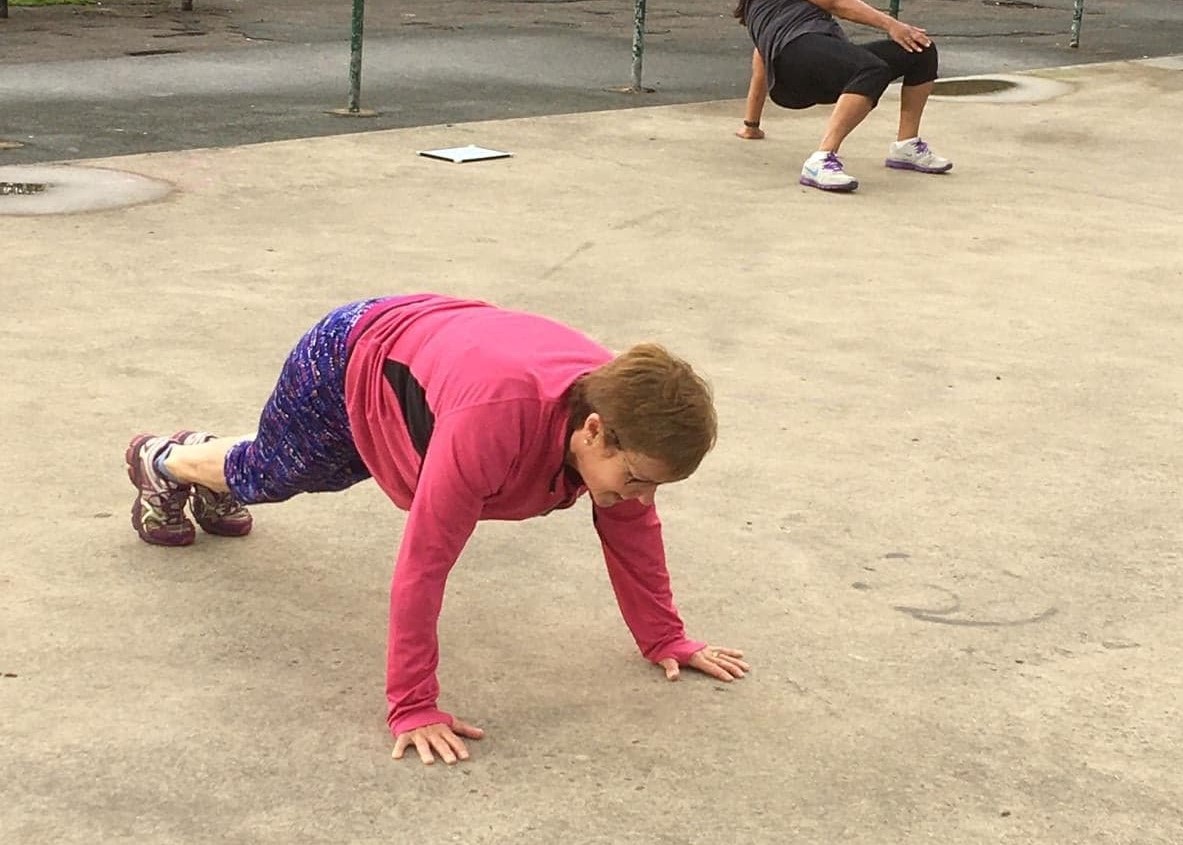
Sadly, when we develop a physical symptom, too often the physical presentation is the only factor addressed without considering any psychosocial factors that might be involved. For example, what might be going on in that individual’s life at the time of the injury/incident. In the 14 years since beginning to have a much better understanding of the mind-body connection, I have seen with hundreds of clients (and experienced personally) just how amazing our bodies are.
Acute onset of knee pain
I experienced this personally just before Christmas (2020) when I suddenly developed acute, excruciating, knee pain. On the face of it, it seemed to be caused by a physical ‘insult’ because I twisted my knee when landing after jumping up during the Commando Fit circuit training I was involved in. The pain was instant and so extreme that I was unable to move my knee, nor put any weight on it.
At the time I didn’t know whether I had actually injured my knee and all I was able to do was hop to the side of the tennis courts we were in and sit down. Initially I remember pondering over whether I would be able to drive to Bristol in 2 days’ time, as well as how was I going to get to my car, let alone drive home!
Pain as a protector
Despite the intensity of the pain though I knew that pain is merely the brain’s interpretation of what has happened and that there is no evidence to link pain with any amount of tissue damage that might, or might not, be present. Pain is an unconscious, primal, protective response based on a number of factors, including: the current situation, previous experiences and other physical, emotional and psychological factors.
An example of how pain protects us, and is not a sign of tissue damage, is the pain we might experience while doing a muscle stretch. For example, you might well experience pain at full stretch when stretching your hamstrings, yet we all know there is no tissue damage. In fact, the further you push, the more pain you experience, but this is to prevent you from being able to push to the point of actually causing tissue damage.
Interestingly, my son broke his knee while kite-surfing in 2019 and he only became aware that there was something wrong when his leg gave way while trying to get back up on the board. Despite having to have surgery, he had no pain in the 48 hours while waiting for an operation, despite there being a clear fracture of his tibial plateau.
Was the pain physical or a protective, mindbody response?
 Back to that evening though and, although at that point I was unable to determine whether I had actually caused any tissue damage, I knew that the best thing for me to do in that moment was exactly what I teach my clients. It certainly couldn’t do any harm and there was nothing else I could do in that moment regarding a physical approach anyway. I therefore ‘walked the talk’ and practised the ‘Pause-Breathe-Feel-Reassure’ strategy I teach my clients.
In other words, I paused my thoughts as I slowed my breathing right down, rhythmically breathing in and out through my nose, counting 5 seconds as I breathed in and 5 seconds as I breathed out. While doing this I also imagined the air flowing in and out around my heart, which brought my attention ‘out of my head’ and worrying/analysing about the pain. The slow breathing and mindfully focusing on my heart meant that I was able to calm my primal brain down, reassuring it that I was safe.
I knew that if this pain was due to a ‘fight or flight’/protective response, this self-soothing would help by calming this and boosting my relaxation response. While doing this I then began to observe my knee calmly and with curiosity and asked myself what had brought this on. I had been attending this bootcamp for over a year and had never had a problem, so I asked myself – ‘why now?‘. Without trying to find an answer, I just allowed myself to calmly observe my body as I continued to mindfully breathe slowly and rhythmically for a couple of minutes.
The Importance of Self-Compassion
At that point I was not aware of any other particular sensations in my body, apart from the pain, but I remained calm, self-compassionate and allowing, rather than trying to find an answer in my head or actively looking for anything in my body. Following that I put my hand on my heart and compassionately said to myself/my body – ‘I feel you, I hear you, I love you, You’re safe’. I also remember self-compassionately acknowledging that there was a lot going on and I reassured myself that I would address this when I got home. By doing this I was acknowledging that the pain was just a signal that there was something I needed to address emotionally and therefore being self-compassionate and accepting towards myself and the pain, rather than reacting to it by feeling angry or scared. Studies show that worrying, fear and anxiety, as well as anticipating pain causes it to increase, therefore by remaining calm and curious I was boosting my relaxation response, rather than fueling my ‘fight or flight’ response’.
I then decided to stand up and see how things were. Initially the pain was still a 10 out of 10 when I tried to put weight on it or move it in any way, but I continued to reassure myself compassionately without any expectations at all (known as being outcome independent i.e. not putting pressure on myself by doing it only to ‘get rid of’ the pain). Suddenly I felt and heard a loud clunk and there was a huge release in my knee and the pain resolved completely and immediately. Interestingly, at the same time as the release I felt a surge of emotion in my chest, which I breathed through allowing it to flow through me, which then allowed it to settle down.
Why the sudden release?
To the others there it must have seemed very strange when I suddenly appeared to be fine, but it made complete sense to me. Stress-induced symptoms like this are part of the ‘fight or flight’ response and one of the common physical reactions involved in this primal response is muscle tension. This is to ensure that the individual is prepared to fight or flee/run away. In this case it seemed to me that my knee had been the target of my primal brain, resulting in sudden, severe muscle spasm. Taking time to be still and calm, allowed me to reassure my primal brain that I was safe and did not need protecting anymore, hence the sudden releasing of the muscle spasm and for the pain to settle down.
Although at that point my knee felt almost 100%, I knew that the pain had been a very clear signal that I would benefit from some more focused self-care, to address the underlying issues that had triggered this acute incident. Also, although I had breathed through the emotion that had surfaced, I hadn’t been able to fully address it while standing in a tennis court surrounded by my bootcamp friends! It therefore would not have been wise to just carry on with the class. At this point I decided to go home to acknowledge and express how I was feeling and to reflect and consider what else I could do to help me deal with all that was going on in my life.
Reflecting on the underlying causes
 Like everyone else over the past year, I have had to learn to live with the uncertainties and losses related to CV-19, which of course is still an ongoing issue and for me this includes not being able to see my family because they live so far away. On top of this, my Brother-in-Law had died a few weeks earlier and I was due to attend his funeral in Bristol two days later, where I would see (but not be able to hug) my family (including my adult children), whom I hadn’t seen for months.
This in itself was unsettling enough, but I had been practising good self-care and taking time out to acknowledge and express how I was feeling and felt I was coping well. Added to this though, just before I left for the class I had heard on the radio that the Prime Minister would be talking to us the next day about potentially bringing in tighter restrictions over Christmas. Our adult children live in the South West and because of the tighter CV-19 restrictions in the North we had not been able to see them much over the previous 9 months. We had all therefore been very excited about being able to spend some time together at Christmas. We had also decided to be careful what we did for 10 days before and to take CV-19 antigen tests to be sure we could safely be together. On top of that, at the last minute there was also another specific stressful incident just as I arrived that evening, so all in all, there clearly had been significant inner turmoil, which I had not had a chance to address.
 I could therefore now see how my knee pain was a very real manifestation of the turmoil I was feeling inside which meant that, rather than focusing on the knee, I needed to work on myself to address this and boost my resilience.
When I arrived home from the class, I did take time to check out my knee and there were no signs of inflammation at that point which would have indicated actual tissue damage (heat, redness and swelling), therefore reinforcing my belief that this had not been a physical injury but a mindbody condition, triggered by psychosocial factors. In order to continue with the self-soothing I had done at the time of the pain onset, I went on to practise an emotional awareness meditation as well as journaling. While journaling I also made sure that I was able to reframe what was going on in order to put things into perspective and focus on what I could do, rather than what I couldn’t do.
Pain pathways and the immune response
I did feel better from doing that and it would be lovely to say that my knee was fine from then on, but that wasn’t the case. It became clear that the disruption to the normal structure of my knee, caused by the muscle spasm, had also resulted in some internal inflammation because I woke the next day to a mild ache in the knee and a tightness due to mild swelling, which didn’t allow me to bend it fully, making kneeling uncomfortable. We know that when the primal ‘fight or flight’ response is triggered, the immune response is also triggered (e.g. think of a deer being chased by a lion), in order to make sure that if an injury occurs, healing can begin immediately.
Unlike the neural circuits that create pain and can be switched off or on instantly, the immune system is a slower process. Therefore, because I knew the discomfort in my knee was due to my immune system being triggered at the same time as the pain, I knew I needed to allow my immune system time to do it’s job and settle down. I therefore also made sure that I continued to prioritise my emotional and mental health while carrying on with my day.
What was interesting was that during much of the day of the funeral (less than 48 hours after the incident) there was no discomfort in my knee as I stood and walked around. It seems that I didn’t require the pain because I was dealing with the emotional side of things that day. Alongside my knee feeling fine for the rest of the evening after the muscle spasm relaxed following the incident, plus no signs of inflammation, these were clues that despite the amount of pain I had had initially, the pain and swelling were not due to damage to the tissues. N.B. Clearly if the pain had not settled down so quickly initially and there were signs of there being a physical injury, I would have acted on that as well.
Ongoing self-care
Obviously, grief and loss is not something you can resolve in days through journaling and other inner work, but it does help, and over the next few days I began feeling more resilient. Over the days after the incident though it was interesting to notice that, whenever I felt an ache or a throb and I paused to slow my breathing down and observe how I was feeling (and what I had been thinking of). While doing this I was always aware of an uncomfortable emotion or thought and, as I acknowledged it, the discomfort from these sensitised neural circuits quickly settled down. Being self-compassionate and kind to myself like this and not just pushing through it, or ignoring it, allowed me to recognise those moments when I wasn’t feeling as resilient. And, by being emotionally aware, I was able to acknowledge and express how I was feeling and then move on.
I actually had no fear related to whether this was an actual injury, or whether it would persist, because I knew that even if it had been an injury it would heal. However, I did begin to realise that due to the intensity of the initial pain, I had some apprehension about going back to the Commando Fit bootcamp, in case it happened again. I therefore allowed myself to acknowledge and express the fear and then to rationalise it all on paper. I also allowed myself to remember the fun times we had at the class, imagining myself doing all the activities with ease, in order to retrain my brain to accept that it was safe to carry on.
After a few days I felt confident enough to go walking over some fields and then I started running again. When I did go back to a Commando Fit bootcamp the following week, I decided to go back on a day it was held in daylight in the local park, rather than in an evening at the semi-dark tennis courts, where it had happened. This allowed me to build up my trust in my knee by being in a different place, removing one of the cues associated with the incident.
 All went well, despite it being icy on the paths, and I was able to attend a couple more classes before, unfortunately, lockdown put a stop to them again.
And finally ……….
Having talked to some of our SIRPA-trained practitioners about this at the time during one of our online chats, we felt that my experience could be a useful learning opportunity for others who might be struggling with acute musculoskeletal pain. Too often acute episodes during physical activities are put down to having ‘pulled a muscle’, ‘compressed’ a nerve, ‘cramp’ or an ‘injury’ that recurs every now and again, without realising that there is often an underlying trigger which would explain why it happened at that point and not another time while doing the very same activity.
This might be a result of current stress but it can also be a result of the pressure we put on ourselves by being overly competitive, ruminating over things or trying too hard to be perfect, maybe in our efforts to become fitter, complete a physical challenge etc. This could include the pressure we put on ourselves when we don’t feel we have done as well as we had hoped, or maybe even from worrying about what our friends thought of us, if we made a mistake.
No matter how fit and well someone is, or how well they understand the mindbody relationship, the mind and body are inextricably linked. As long as we recognise that our body can reflect how we are feeling and thinking, then by addressing that, rather than just focusing on the actual physical symptom/sensation, we can strengthen our mental, physical and emotional resilience.
DISCLAIMER: Clearly when there is an acute manifestation of pain, especially during a physical ‘insult’, it is wise to rule out any physical injury. While swelling is a common stress-induced symptom because the immune system is triggered when the stress response is triggered, if there is heat and redness at the site of the pain, then this would indicate tissue damage. Although all that I did can help with this, clearly you would also need to allow time for healing to occur.
Georgie Oldfield MCSP
Physiotherapist & Founder of SIRPA
To listen to my TEDx talk – click HERE
Sign up to our Mindbody Wellness series of webinars for just £37