
4 minutes
⟵ Back to Blog
Pain in the brain?
Contents
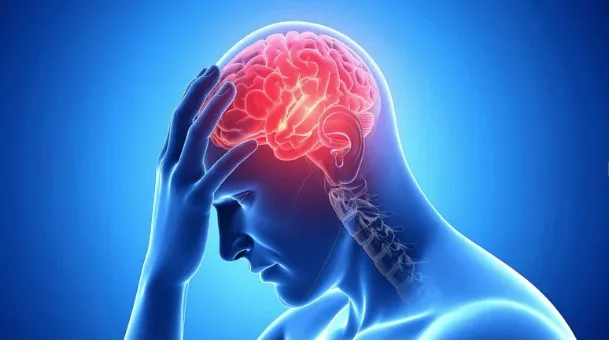
The Brain’s involvement in pain is becoming better understood – but the mind is often still sidelined. I am writing this on the train coming back from London where I was attending a conference, titled ‘Pain in the Brain’.
I was quite excited about what new research might be mentioned and because it was jointly organized between the Psychiatry team and the Pain/Rheumatology/Rehabilitation sections of the Royal Society of Medicine, I was hoping that there would be a significant emphasis on the mind’s involvement in the pain cycle.
Studies are all based on what is tangible and measurable
 Some of the talks were interesting, but the emphasis was definitely on the physical, tangible aspects of pain, which is where all the studies are focused. It’s great that there is so much interest in studying the brain and the biochemistry and neurophysiology of chronic pain, because all this will definitely help in our overall understanding of pain. Unfortunately though, this emphasis on only what is tangible, because it is easier to measure, means that the understanding of the involvement of emotions in the pain cycle is usually limited to how they affect pain, rather than how it causes it in the first place. Unfortunately, while this is the case, the aim of treatment will remain on management, rather than cure.
One of the speakers at the conference, Prof Irene Tracey, from Oxford University, uses brain imaging to research the neurophysiology of chronic pain. These and other studies do provide some recent supportive evidence for the SIRPA approach, where we recognize the importance of understanding the involvement emotions have in the pain cycle.
Proof that the pain can be perceived, despite there being no physical reason
One study Prof Tracey mentioned actually demonstrated that brain stem regions involved in pain can be ‘switched on’, despite there being no tissue damage. Unfortunately, because no tangible explanation can be found in the brain, the ‘software of the brain’, the mind, is not considered and this ‘anomaly’ remains ‘unexplained’.
There were talks about functional movement disorders, such as Dystonia, and also about whether complex regional pain disorder is a neuropsychiatric disorder. It was clear that with these too, the understanding was not clear, the involvement of the mind not fully understood and the treatment approaches used were very involved and long term.
Long term and therefore costly physical treatment
I suppose the talk that most frustrated me was about the rehabilitation over the past 2 years of a lady who presented with a multifaceted shoulder problem where, although there was some progress, there was still substantial disability even after all that time. It appears she had been in a severe car accident, resulting in broken bones and being hospitalised 3 years earlier.
Although there was some suggestion that her delayed onset condition might be related to the neurophysiology following this, the emotional impact on the brain and therefore her body was not mentioned. When questioned afterwards it seems that because the lady appeared not to be openly distressed when talking about the accident, it was not considered relevant.
When a Psychiatrist suggested that it might be due to the emotional trauma, rather than the physical trauma of the accident and could have been resolved in 6 weeks, it was clearly not taken seriously.
I do find it frustrating that although stress and emotional triggers are, in my experience, the most common cause of chronic pain, it is still so little known. People like this lady often go through years of pain and disability, whereas if only the underlying cause was identified, they could often recover so much more quickly and although at times it might be months, it can be in weeks as the Psychiatrist suggested. The benefits of this for the patients, employers, the NHS and therefore the economy are obvious.
Our journey from here
Just as with any ‘new’ idea though, it will take time to catch on, but I hope that by the time I retire (many years yet!), I will have made at least some impact in helping to change the current mindset about the cause and treatment of chronic pain. In the meantime though I will continue to use the strategies I teach my patients in order to cope with the frustrations and stresses my work in this field can cause me!
This blog is part of my journaling to offload my frustrations, but to gain perspective (which of course is also important) – I did meet some interesting people too, even though we agreed we seem to be living on a different planet from most of the other people at the conference!